
How to Search Durham County Court Records
Durham County court records are searched mainly through the North Carolina eCourts Portal. The Portal runs on Tyler Technologies' Enterprise Justice platform, and the state moved every county onto it by late 2025. It lets the public look up case summaries, parties, hearings, judgments, and some documents at no charge. The Durham Clerk of Superior Court page links straight to the same Portal for case info and for paying fines and fees.
Before you start, gather what you know. A case number gives the fastest result. A party name works too, but North Carolina uses wildcard rules you should know up front. The portal is public access, not the official record, so plan a second step at the Clerk's office if you need a certified copy.
- Open the North Carolina eCourts Portal and choose Smart Search for cases or Search Hearings for court dates.
- Enter a case number or a party name. Use the Enterprise Justice case number format if you have it.
- Use Advanced Filtering to narrow to Durham County, case type, status, and a filing date range.
- Open the case summary and review the parties, case events, hearings, and any dispositions.
- Request a certified copy from the Durham County Clerk of Superior Court if you need an official document.
Wildcards matter on this system. A name search needs at least three letters of the last name plus an asterisk, and at least one letter of the first name plus an asterisk. A case-number search needs at least four characters before the asterisk. The Portal's own guidance says Smart Search returns the most consistent results, so try it before jumping to a narrower search type. More detail lives on the Durham County court records page.
The main portal accepts several search fields. The table below lists the key ones for a Durham County case lookup.
| Search Field | Type | Notes |
|---|---|---|
| Smart Search | Name or case number | Default search; recommended for consistent results. |
| Case Number | Text | Format is year, case type, six-digit sequence, county code (example 21CR000003-910). |
| Party Name | Text | Three last-name letters plus asterisk, one first-name letter plus asterisk. |
| Citation Number | Text | Used for traffic and citation matters. |
| Attorney Name / Bar Number | Text | Search by counsel of record. |
| Location / County | Filter | Select Durham County to narrow results. |
North Carolina's statewide eCourts rollout changed how Durham residents reach case data. The official overview explains the move to one shared platform.
You can read the state's plain-language summary on the North Carolina eCourts page, shown below.
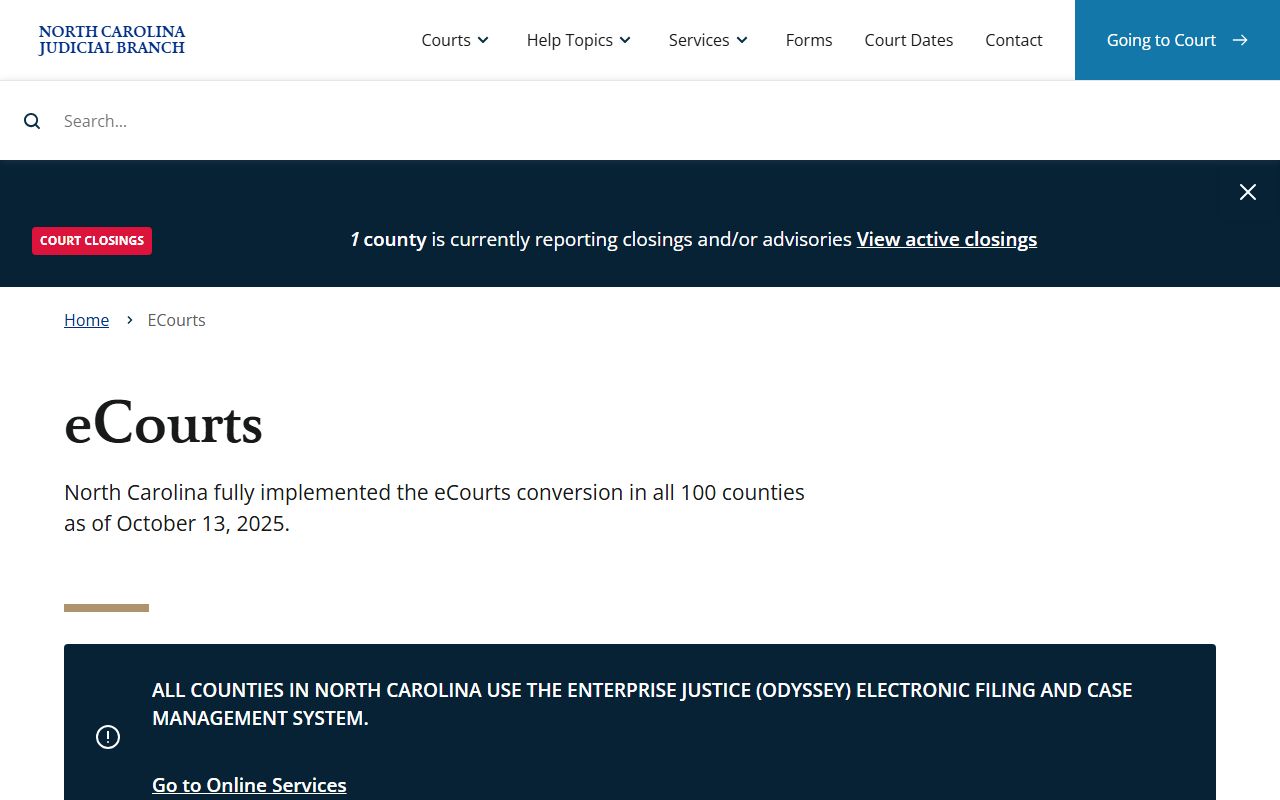
That single-system design is why a Durham County court records search now looks the same as a search in any other North Carolina county.
The Durham County Judicial System
North Carolina runs one statewide court system, so there is no separate county court network in Durham. The hierarchy starts with the Supreme Court of North Carolina, then the North Carolina Court of Appeals, then the trial divisions. Superior Court handles felonies and civil cases over $25,000. District Court handles misdemeanors, infractions, family law, juvenile matters, and civil cases of $25,000 or less. Magistrates are officers of District Court and take small claims, landlord-tenant disputes, marriage ceremonies, and early criminal process.
Durham County sits in Superior Court District 16 and District Court District 16. The District Attorney, Satana Deberry, leads Prosecutorial District 16 from the courthouse. All of these offices share one address downtown, which keeps court business in a single building rather than scattered county courts.
Case flow: District Court › Superior Court › North Carolina Court of Appeals › Supreme Court of North Carolina
| Court | Jurisdiction | Case Types |
|---|---|---|
| Supreme Court of North Carolina | Highest appellate court | Final appeals on major legal questions. |
| North Carolina Court of Appeals | Intermediate appellate court | Most appeals from the trial divisions. |
| Superior Court (District 16) | Felonies, civil over $25,000 | Felony trials, large civil suits, appeals for trial de novo. |
| District Court (District 16) | Civil of $25,000 or less | Misdemeanors, infractions, divorce, custody, juvenile, traffic. |
| Magistrates | Officers of District Court | Small claims, evictions, warrants, marriages. |
The official chart of these levels comes from the state courts site.
You can compare the divisions on the structure of the courts page, captured below.
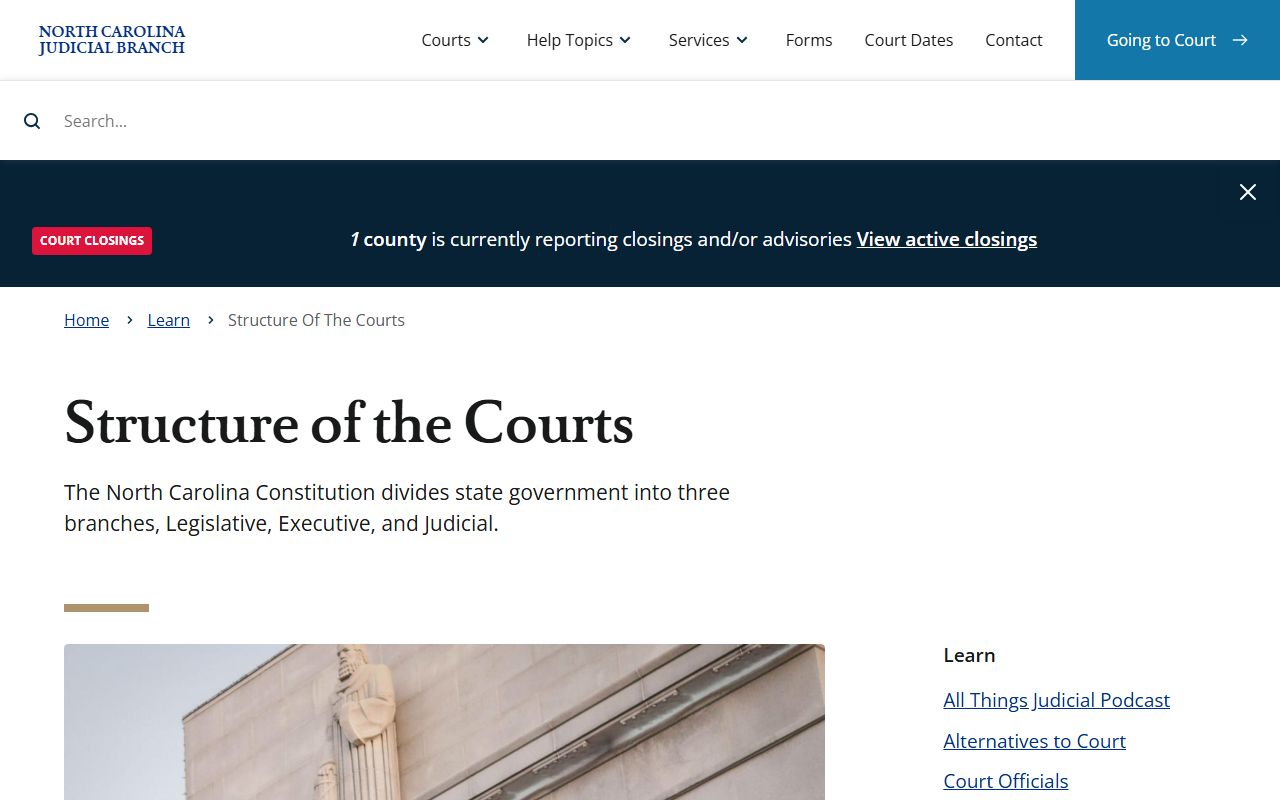
Knowing which division hears a case helps you guess where its records live before you ever open the portal.
Durham County Courthouses
Most Durham County court business happens at the Durham County Courthouse, also called the Justice Center, at 510 South Dillard Street. The modern eleven-story building opened in 2013 with about 20 courtrooms and brought the Clerk, the trial courts, the District Attorney, and courthouse security under one roof. The county jail is a short walk away on South Mangum Street, and the federal courthouse sits a few blocks north.
Durham County Detention Facility
219 South Mangum Street
Durham, NC 27701
(919) 560-0912
John Hervey Wheeler Courthouse
323 East Chapel Hill Street
Durham, NC 27701
(919) 425-8900
The county's Judicial Branch landing page is the best starting point for hours, calendars, and service links.
That page is shown below and links out to forms, traffic payment, and jury duty for Durham County court records.
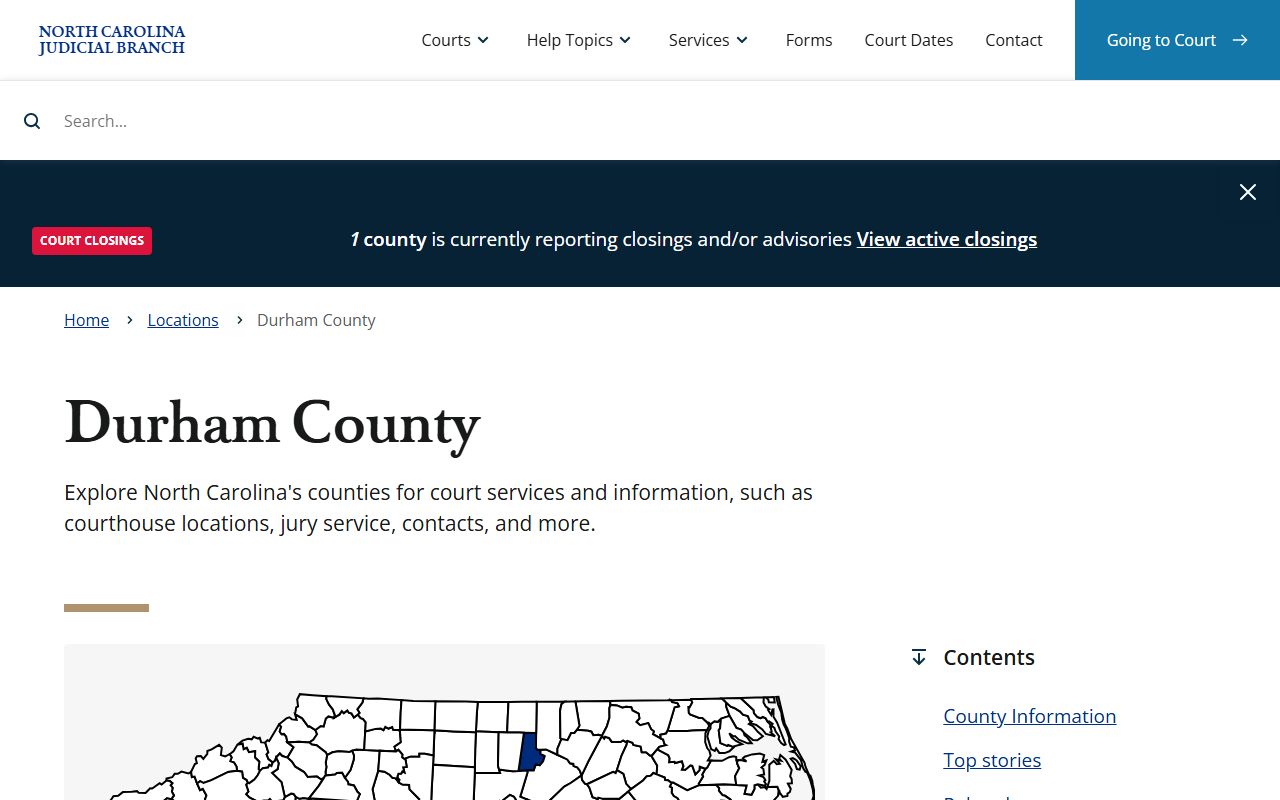
The official courthouse page adds the entry, security, and accessibility details visitors need before a trip downtown.
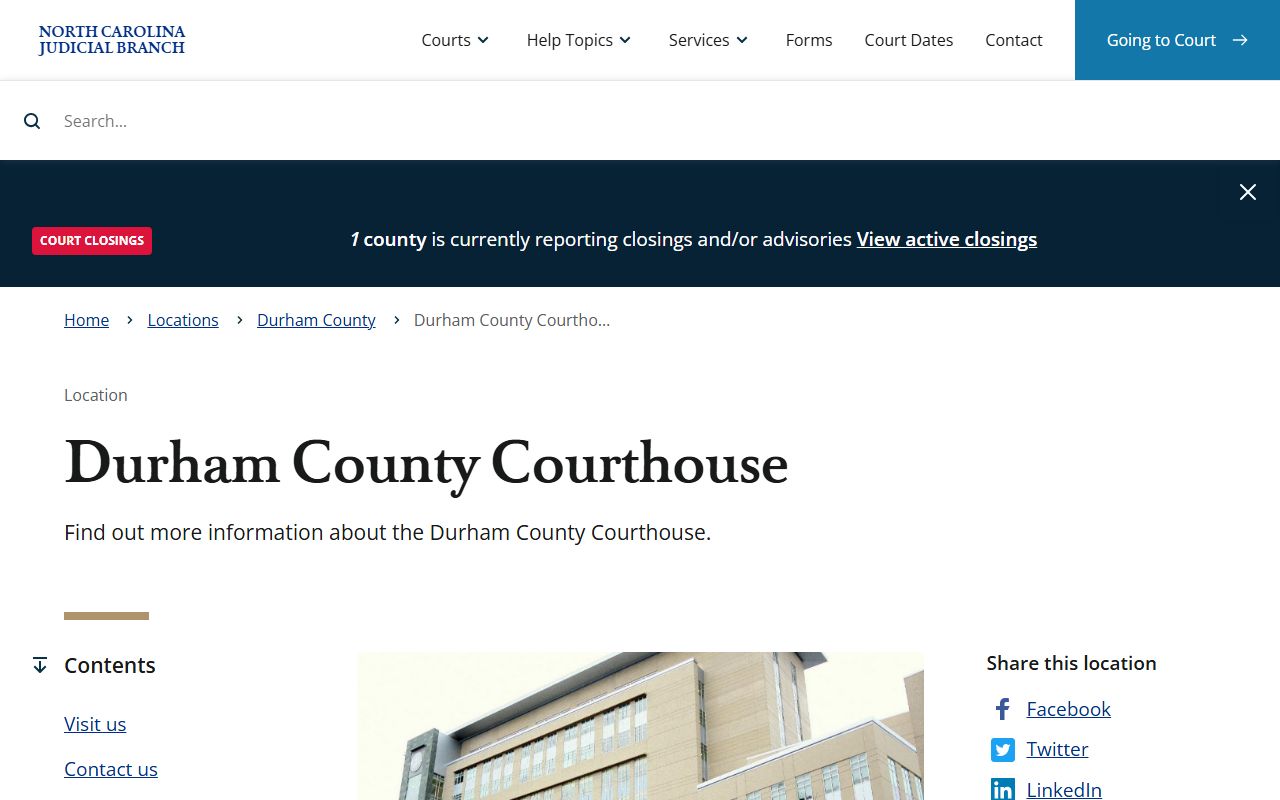
All public entry runs through the South Dillard Street doors, so plan extra time for screening on busy court days.
The court contact directory lists each office in the building, from the Clerk to the judges and the District Attorney.
It is shown below on the Durham County contact directory page.
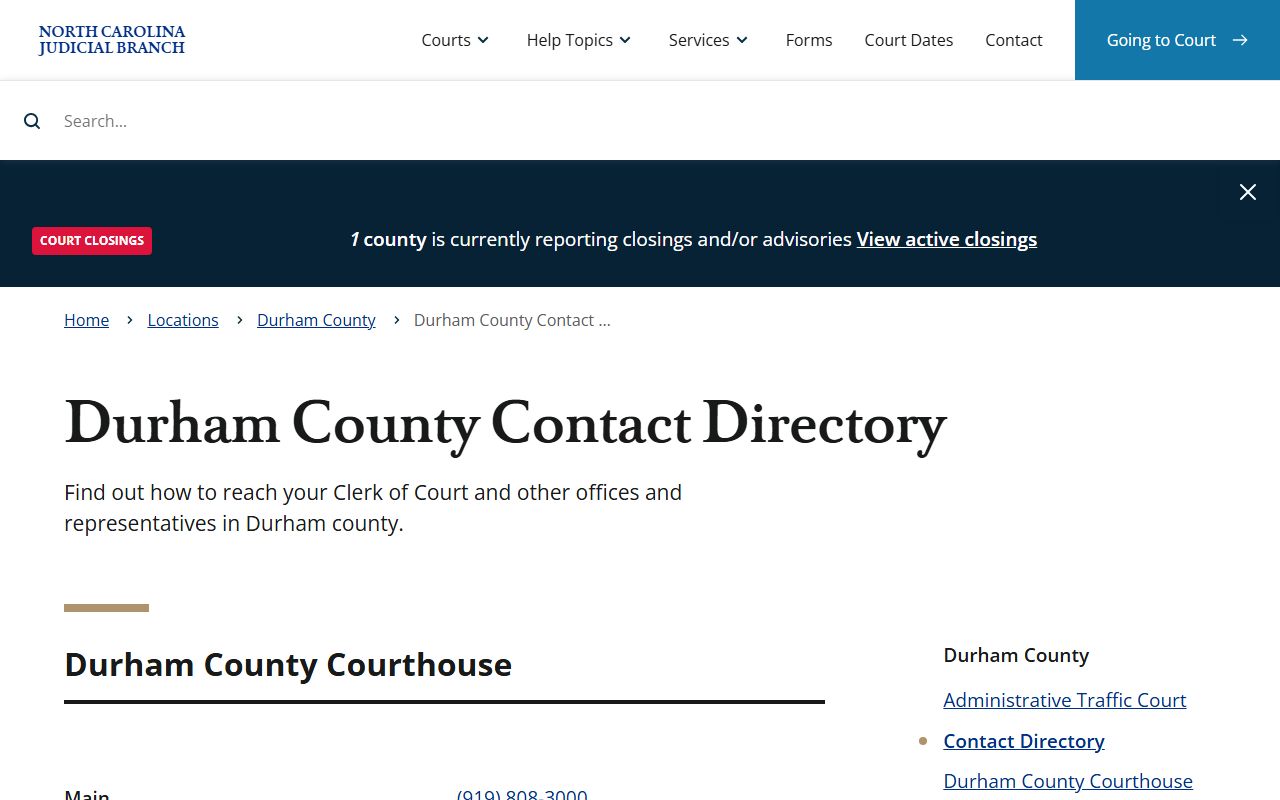
Use it to reach the right division before you visit, since each handles a different set of records.
Types of Court Records Available in Durham County
Durham County court records cover a wide range of case types, and the division that hears the case shapes where the record sits. District Criminal and Traffic Records handles district-level criminal and traffic files, while Superior Criminal handles felony files. Civil, Family Court, Estates, and Special Proceedings each keep their own sets of records. Some of this material is public through the portal. Some is sealed or confidential by law.
Here is a quick map of the main record groups and what they hold.
- Criminal records - misdemeanors, felonies, infractions, pleas, dispositions, and bond information.
- Civil records - lawsuits, small claims appeals, evictions, liens, and money judgments.
- Family records - divorce filings, custody, child support, and domestic violence protective orders.
- Probate and estate records - wills, estate administration, guardianships, and year's allowance filings.
- Traffic records - citations, court dates, fines, and case dispositions.
The state's court records help topic explains which records the public can reach and which need the Clerk.
That guide is shown below and is a good first read before a Durham County court records search.
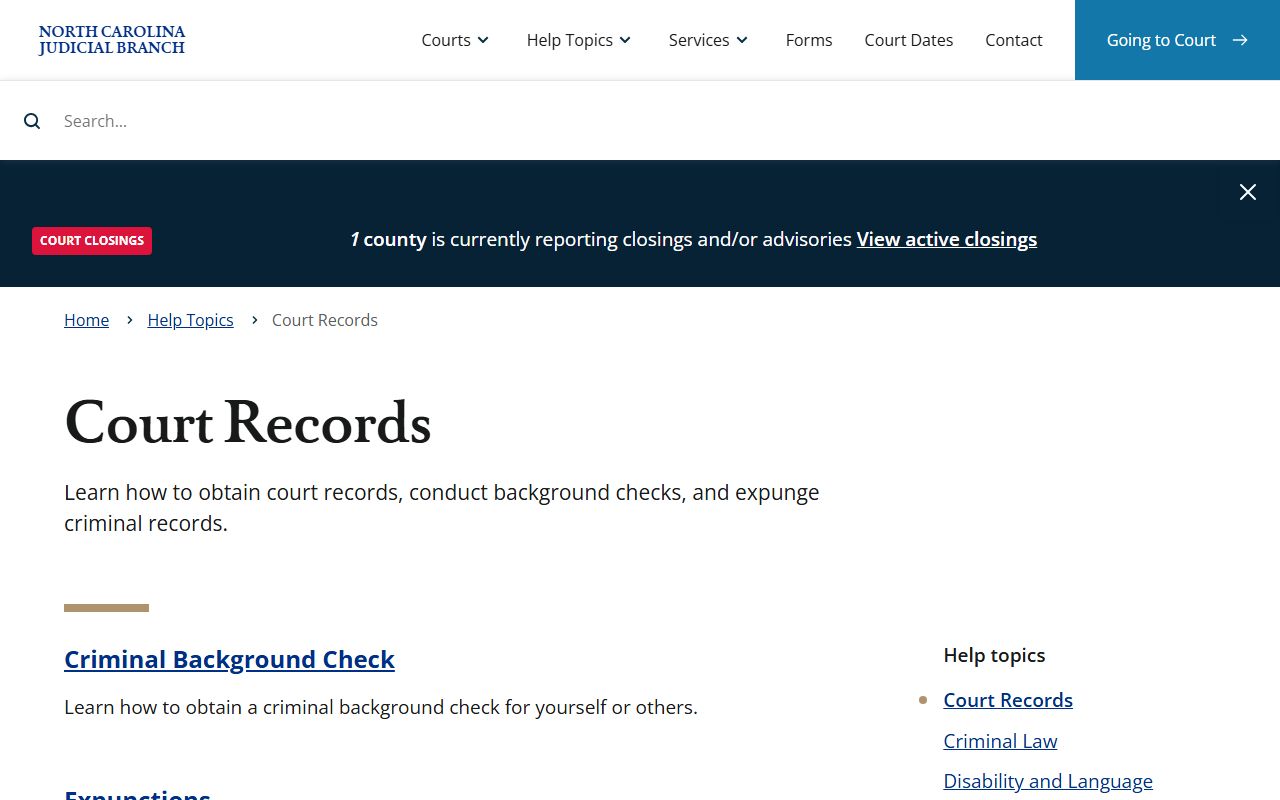
For arrest and booking detail, the Durham County arrest records page goes deeper than the home page can.
What Durham County Court Records Show
A public case summary in the eCourts Portal can show a lot of structured data. Enterprise Justice case numbers have four parts: a two-digit year, case type letters, a six-digit sequence number, and a three-digit county code. The state's own example is 21CR000003-910. The case type letters hint at the record group, so CR points to a criminal case and IF points to a traffic infraction.
The table breaks down the fields you are likely to see on a Durham County court record.
| Field | What It Shows |
|---|---|
| Case Number | Year, case type, sequence, and county code that identify the file. |
| Filing Date | The date the case opened or an event was filed. |
| Parties | Plaintiff and defendant, or the State and defendant, plus attorneys. |
| Charges / Cause | The offense charged or the legal claim driving the case. |
| Disposition | The result, such as guilty, dismissed, or a civil judgment. |
| Financial | Court costs, fines, restitution, and any balance owed. |
Some fields are masked. The Portal hides Social Security numbers, may mask a public date of birth, and removes sealed or expunged records from public view.
Public Access Laws for Durham County Court Records
North Carolina mixes a broad public records law with court-specific rules. Chapter 132 sets a wide right of access to records that government agencies make or receive. Court records have their own custodian rules, though, and many exceptions. For county case files, the Durham County Clerk of Superior Court is the custodian, not the state administrative office. Several statutes shape what you can and cannot see.
Key Statutes:
N.C.G.S. § 132-1 - defines public records broadly to include papers, electronic data, and other materials made in public business.
N.C.G.S. § 132-6 - requires custodians to allow inspection and provide copies as promptly as possible.
N.C.G.S. § 7A-109 - sets clerk record-keeping duties and allows remote electronic access where the law permits.
N.C.G.S. § 7B-3000 - makes juvenile records confidential and limits who may view them.
The Judicial Branch keeps a plain-language FAQ on the public records law for people who are not lawyers.
That FAQ is shown below and is worth a look before you file any request for Durham County court records.
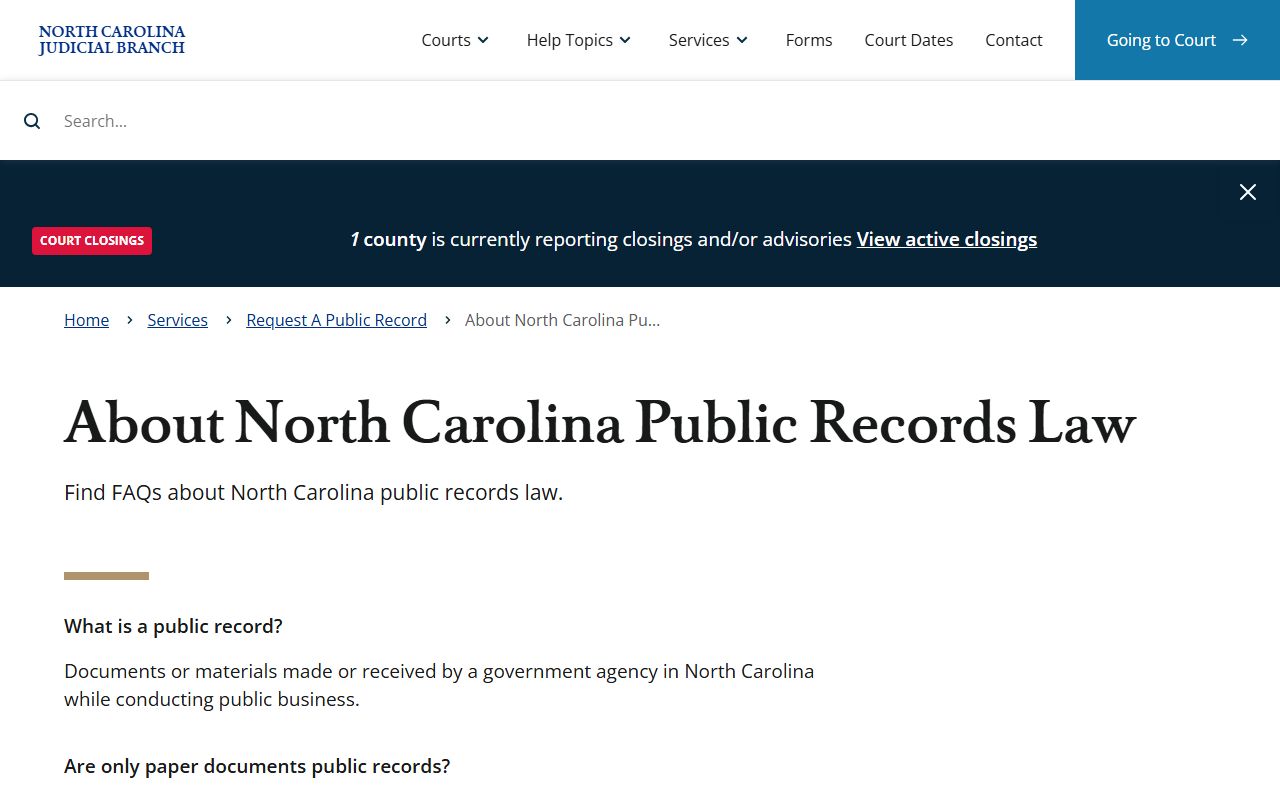
The broader Durham County public records page walks through how to file a request and what fees may apply.
Records That Are Restricted or Confidential
Not every Durham County court record is open. Juvenile records are confidential and limited to people the law names, such as the juvenile, a parent, an attorney, or a prosecutor. Adoption records are sealed except for the decree and the index entry. Involuntary commitment records under Chapter 122C are confidential. Expunged records are removed from public view, so an old arrest or dismissed charge may no longer appear in the portal at all.
To view a sealed record, you usually need a statute that allows it or a court order. The custodian for that decision is the court, so start with the Clerk's division that holds the file. Do not rely on third-party sites to tell you whether a record is sealed, because their data can be stale or wrong.
Specialty Courts in Durham County
Durham County runs problem-solving courts that aim to cut repeat offenses for nonviolent people whose cases tie to substance use or mental illness. Durham Recovery Court, also called Drug Treatment Court, offers a supervised, community-based path instead of incarceration. It pairs court review hearings with probation, treatment, and drug testing, and uses incentives for progress and sanctions for slips.
Durham County Mental Health Court Diversion connects people who have serious mental illness to treatment and services to break the cycle of jail and release. The North Carolina Judicial Branch lists Durham among its mental health court sites. Reentry Services and the Local Reentry Council round out the picture, linking people leaving custody to housing, jobs, and care. The released inmates page covers those reentry resources in more depth.
Durham County Sheriff and Jail
The Durham County Sheriff's Office, led by Sheriff Clarence F. Birkhead, runs the county jail. The Durham County Detention Facility at 219 South Mangum Street opened in 1996 with 576 single cells and now holds up to 736 people after bunk beds were added. It uses a direct-supervision design, with housing pods arranged around dayrooms and services brought to the inmates instead of moving inmates around the building.
The jail roster shows custody, not a full case history. A booking can mean a pretrial hold, a short sentence, or a hold for another agency. For the full picture, check the Durham County inmate records page for the roster details and the warrant records page for active warrants. Court charges and dispositions still come from the portal or the Clerk.
Marriage, Divorce, and Probate Records
North Carolina splits these records between two offices, and Durham follows that split. Marriage licenses come from the Durham County Register of Deeds. Divorce filings and decrees are court records kept by the Clerk of Superior Court. Probate runs through the Clerk's Estates Division because the Clerk acts as judge of probate. The marriage and divorce records page and the probate records page cover each path in detail, and the Register of Deeds page handles vital and land records.
- Testator
- A person who dies leaving a valid will.
- Executor
- The person named in a will to settle the estate.
- Intestate
- Dying without a will, so state law decides who inherits.
- Year's Allowance
- A set amount a surviving spouse or child may claim from the estate.
The Register of Deeds landing page is a useful map of which vital and land records sit outside the courthouse.
It is shown below and covers land, business, marriage, notary, and military records.
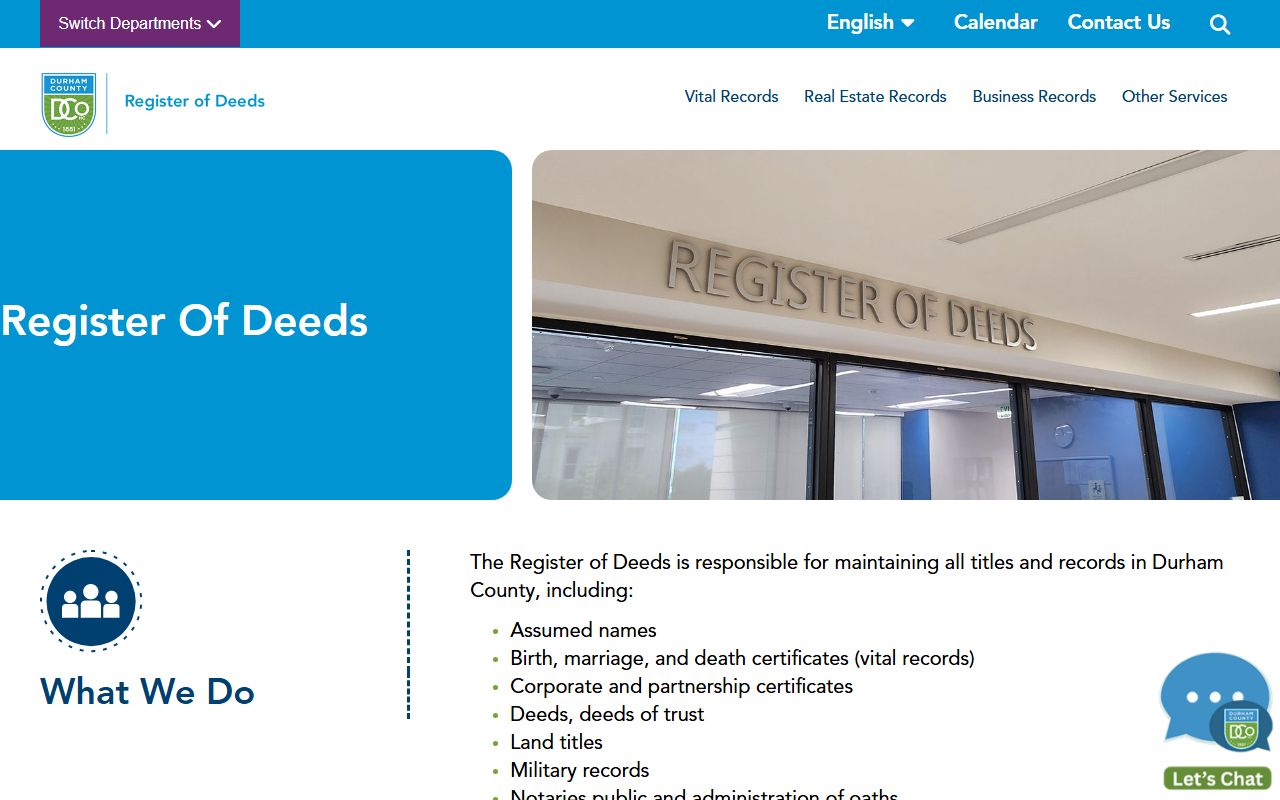
Remember the split: a marriage license is a Register of Deeds record, but a divorce decree is a Clerk of Superior Court record.
Durham County Court Records Fees
Fees depend on the office and the document. The Clerk's traffic page lists set court costs for citation and other criminal cases, and those costs are separate from any fine. Expunction petitions carry their own filing fee in most cases. Marriage and certified-copy fees fall under the Register of Deeds schedule. The table gathers the figures the official Durham pages publish.
| Item | Amount |
|---|---|
| Traffic infraction court costs | $193 plus fine if any |
| Other criminal charge court costs | $191 plus fine if any |
| Expunction petition filing fee | $175 (often waived for dismissed or not-guilty cases) |
| Marriage license | $60 cash |
| Register of Deeds certified copy | $5 first page, $2 each added page |
Note: Court copy and certification fees follow state court-cost rules and local clerk practice, so confirm the current amount with the Clerk before you pay.
How to Interpret Durham County Court Records
Reading a court record takes a little fluency. A charge is not a conviction. A defendant is charged at the start of a case, and the disposition tells you how it ended. Common dispositions include guilty, not guilty, dismissed, and dismissed with prejudice, which blocks refiling. In civil cases, look for the judgment to learn who won and what is owed.
The case events list, also called the register of actions, is the timeline. It logs motions, orders, continuances, warrants issued or returned, and the judgment. Bond terms use North Carolina words like secured bond, unsecured bond, and written promise to appear. When a record looks unclear, the Clerk can explain the procedure, though staff cannot give legal advice about what a result means for you.
Accuracy and Record Limitations
Online records can lag behind the courthouse. A new filing, a recent disposition, or a resolved warrant may take time to show in the portal. A blank result does not prove a person has no record. It can mean a misspelling, a wildcard problem, a sealed or expunged file, a case under a different name, or a case in another county.
Note: Always confirm key details with the originating office before you rely on an online Durham County court record for any important decision.
History of Durham County Courts
Durham County was created in 1881 from parts of Orange and Wake counties, with the city of Durham as its seat. The county's court infrastructure took a big step in 2013, when the modern Justice Center opened downtown and consolidated the Clerk, the courtrooms, the District Attorney, and courthouse security into one tower. The newest shift is digital. The statewide eCourts move placed Durham and every other county on the Enterprise Justice platform, changing how the public reaches court dates, case summaries, judgments, and payments.
Frequently Asked Questions
How do I search Durham County court records online?
Use the North Carolina eCourts Portal Smart Search. You can search by case number, party name, citation number, attorney name, attorney bar number, business name, or cross-reference. Advanced Filtering lets you narrow to Durham County, case type, status, and a filing date range. The Portal is free, but it is not the official court record. For certified copies, contact the Durham County Clerk of Superior Court at the courthouse.
Where is the Durham County Courthouse?
The courthouse is at 510 South Dillard Street, Durham, NC 27701, and the main phone is (919) 808-3000. Public hours run Monday through Friday, 8:30 a.m. to 5:00 p.m. All public entry is through the main South Dillard Street doors. Ramp access is on the Mangum Street side, and accessible parking-deck access is on level three.
Can I get certified court copies from the portal?
No. The portal gives public access to case information and some documents, but it is not the official court record. For certified copies, contact the Durham County Clerk of Superior Court. Different divisions handle different requests, including Civil, Criminal and Traffic, Superior Criminal, Estates, Judgments, and Special Proceedings.
More answers sit on the Durham County Court Records FAQ page.