
How to Find Durham County Arrest Records
Most Durham arrests run through the county jail, so the fastest way to find a recent booking is the Sheriff's roster. The Durham County Sheriff's Office posts an Inmate Population Search on its site. The tool lists people held in the Durham County Detention Facility and is the closest thing the county has to a public arrest blotter. It shows current custody and recent bookings, not a full case file. The roster is updated by jail staff, so a new arrest can take a little time to appear.
Start with the roster, then move to court records if you need charges and outcomes. The jail page is a custody snapshot. The court portal holds the case history. Both matter when you trace one arrest from booking to disposition.
- Open the Durham County Inmate Population Search on the Sheriff's site.
- Use the roster filters to view current inmates or people booked in a recent window.
- Select a name to see the booking record, charges, and custody status that the jail makes public.
- If the person is not listed, call the Durham County Detention Facility to confirm a booking or release.
- Move to the court portal to pull the charges, court dates, and any disposition tied to the arrest.
The roster page is built with JavaScript, so it can look sparse until it loads in your browser. Give it a moment. The Durham County inmate records page covers the roster tool in more depth, including how to read a booking profile.
The Durham County Jail and Booking
The Durham County Sheriff's Office, led by Sheriff Clarence F. Birkhead, runs the county jail. The Durham County Detention Facility sits at 219 South Mangum Street, a short walk from the courthouse. It opened in 1996 with 576 single cells and now holds up to 736 people after bunk beds were added. The jail uses a direct-supervision design, with housing pods arranged around dayrooms. It runs 24 hours a day, every day of the year.
Booking is the process that creates the arrest record the public can see. A person arrested in Durham is taken to the detention facility, where intake and release functions and the criminal magistrates work on the lower levels. Staff record the person's name, the charges, and booking data. Criminal magistrates handle early matters like initial appearance and release conditions. After screening and classification, the person is assigned to a housing pod based on risk and need.
Release can take several forms in North Carolina. A magistrate may set a written promise to appear, an unsecured bond, or a secured bond that needs money or surety before release. Some people are held with no bond at that point in the case. A no-bond status does not mean the case is over. It is just the current release condition.
Durham County Detention Facility
219 South Mangum Street
Durham, NC 27701
(919) 560-0912
Open 24 hours, 7 days a week
For administrative questions, the Sheriff's main office shares the courthouse block at 510 South Dillard Street and can be reached at (919) 560-0897. The Sheriff's site also ties into Durham's problem-solving courts, which can route some arrested people toward treatment instead of jail.
The state lists Durham among its mental health court sites, and that page is shown below.
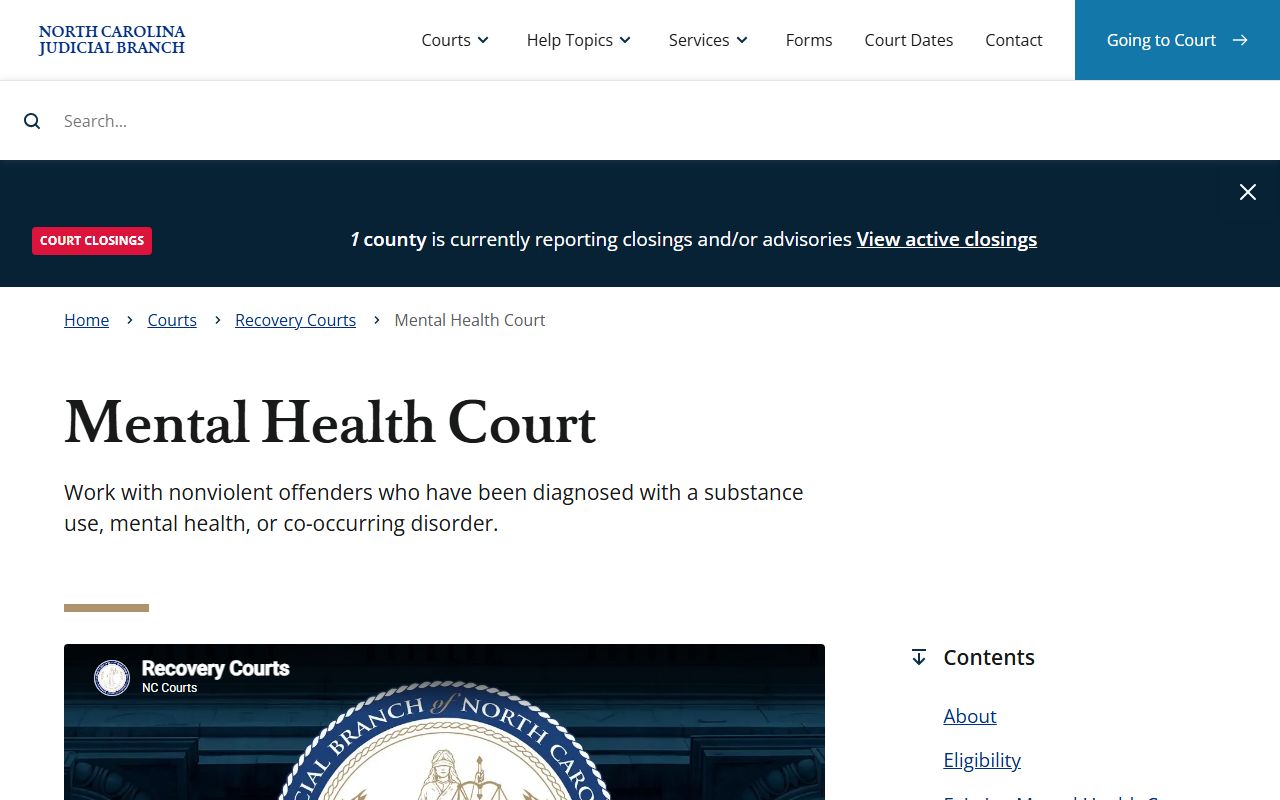
That diversion path matters because not every booking ends in a long jail stay; some Durham cases move toward treatment and supervision.
What the Durham County Jail Roster Shows
The Inmate Population Search is the public face of the booking system. The official page is JavaScript-driven, so the full field list shows best in a live browser. From public descriptions, the roster offers filters such as current inmates or people booked within a recent window, plus a name selector to jump to a record. Each booking record carries the basic data the Sheriff makes public.
The table lists the fields you can expect to see on a Durham booking profile.
| Field | What It Shows |
|---|---|
| Name | The booked person's full legal name. |
| Booking Number | The jail's inmate or booking identifier for the stay. |
| Booking Date / Time | When the person was processed into custody. |
| Charges | The offense or offenses listed at booking. |
| Bond | Bond amount and type, or a no-bond status. |
| Custody Status | Current housing or whether the person was released. |
One caution on photos. Booking photos, often called mugshots, may or may not appear on the public roster, and jail policy can change. Do not assume a mugshot is posted for every record. The same goes for release data, which may show on a profile once a person leaves custody.
Note: The jail roster reflects custody, not a finding of guilt, so a booking charge can still be reduced, dropped, or dismissed once the case reaches court.
Arrest Records vs Criminal Court Records
An arrest record and a criminal court record are not the same thing. The arrest record is the booking event, held by the Sheriff. The criminal court record is the case the District Attorney prosecutes, held by the Clerk of Superior Court and searchable in the court portal. One arrest can lead to one court case, several cases, or no charges at all. People often confuse the two, so it helps to see them side by side.
| Arrest Record | Criminal Court Record |
|---|---|
| Created at jail booking | Created when a charge is filed in court |
| Kept by the Sheriff's Office | Kept by the Clerk of Superior Court |
| Found on the jail roster | Found in the eCourts Portal |
| Shows custody and booking charges | Shows pleas, hearings, and dispositions |
| Snapshot of one custody event | Full history of the case |
For the full story behind an arrest, you need the court side. Charges, court dates, and the final outcome live in the case file. The Durham County court records page walks through the eCourts Portal in detail and explains how to pull a complete criminal case history.
Court-related warrant and arrest events can also show up as case events in the portal. When an order for arrest or a criminal summons is issued, returned served, or recalled, the portal may log it.
Charges vs Convictions in Durham County Records
This is the single most important distinction in any criminal record. A charge is an accusation. A conviction is a finding of guilt. A booking charge at the jail is just the starting point, and a defendant is presumed innocent until a court decides otherwise. Many charges end without a conviction.
| Charge | Conviction |
|---|---|
| An accusation of a crime | A court's finding of guilt |
| Appears at arrest or filing | Appears as a disposition |
| Can be reduced or dropped | Carries a sentence or penalty |
| Does not prove wrongdoing | Becomes part of the criminal history |
In the court portal, the disposition field tells you how a charge ended. Common results include guilty, not guilty, dismissed, and dismissed with prejudice, which blocks refiling. A traffic citation that someone pays before court is treated as pleading responsible to the original charge, which can affect a license. Read the disposition before you draw any conclusion from a Durham County criminal record.
What Arrest Records Are Public
North Carolina opens many records to the public, but criminal records follow special rules. Chapter 132 sets a broad right to inspect records that government agencies make or receive. For law-enforcement records, the line is drawn by statute. Returned arrest and search warrants, indictments, and criminal summonses are public court records unless a court seals them. Criminal investigative files, though, are generally not public.
So arrest information can be public while the detective's case notes stay closed. The booking roster is public. The full investigation behind it is not. Several statutes shape this balance, and a few are worth knowing.
Key Statutes:
N.C.G.S. § 132-1.4 - keeps criminal investigation files closed while making returned warrants, indictments, and summonses public unless sealed.
N.C.G.S. § 132-1 - defines public records broadly across electronic data, papers, and other agency materials.
N.C.G.S. § 7A-109 - sets the Clerk's record-keeping duties and allows electronic access where the law permits.
For official copies of a Durham criminal file, the custodian is the Clerk of Superior Court. The Cashier division handles certified background checks, and the Criminal and Traffic divisions hold the case files. The portal gives free public access, but it is not the official record.
Restricted and Confidential Records
Not every arrest or charge stays visible forever. North Carolina law restricts several categories, and Durham follows those rules. Juvenile records are confidential and limited to people the law names. Adoption and involuntary commitment records are closed by statute. Expunged records are removed from public view, so an old arrest or dismissed charge may no longer appear in any public system at all.
Two terms get mixed up a lot. Sealing restricts public access to a record. Expunction removes or destroys an eligible record. They are different processes with different effects, and the comparison below sorts them out.
| Sealed | Expunged |
|---|---|
| Record still exists | Record is removed or destroyed |
| Access is limited by law | Person may deny the arrest or charge |
| May be opened by court order | Cannot be pulled from the Clerk later |
| Used for some warrants and filings | Used for eligible dismissed or old cases |
Expunction in North Carolina is a court process. A petition is filed with the Clerk of Superior Court in the county of the charge, so Durham charges are filed with the Durham Clerk. There is generally a $175 filing fee, though dismissed or not-guilty petitions often carry no fee unless they followed a diversion program. Indigent filers may seek a fee waiver. Once an order is granted, Durham's court and law-enforcement systems remove the eligible record from public view.
Because of expunction, do not assume that an arrest record, a mugshot, or a dismissed case will stay visible. What you see can differ across the jail roster, the court portal, the state offender search, and federal systems. Each one has its own legal purpose and its own display rules.
State Criminal and Offender Searches
The county jail roster only covers people held in Durham. Once a person is convicted and sent to state prison, or placed on probation or parole, the record moves to the North Carolina Department of Adult Correction. The NC DAC Offender Public Information Search holds state prison offenders, probationers, and parolees, with historical data going back decades. It does not include county jail bookings. So use the jail roster for current custody in Durham, and use NC DAC for state-level offender status.
The DAC search lets you look up an offender by last name or by an offender ID, and it also offers release, absconder, and aggregate report tools.
The state offender search page is shown below and links to its release and notification tools.
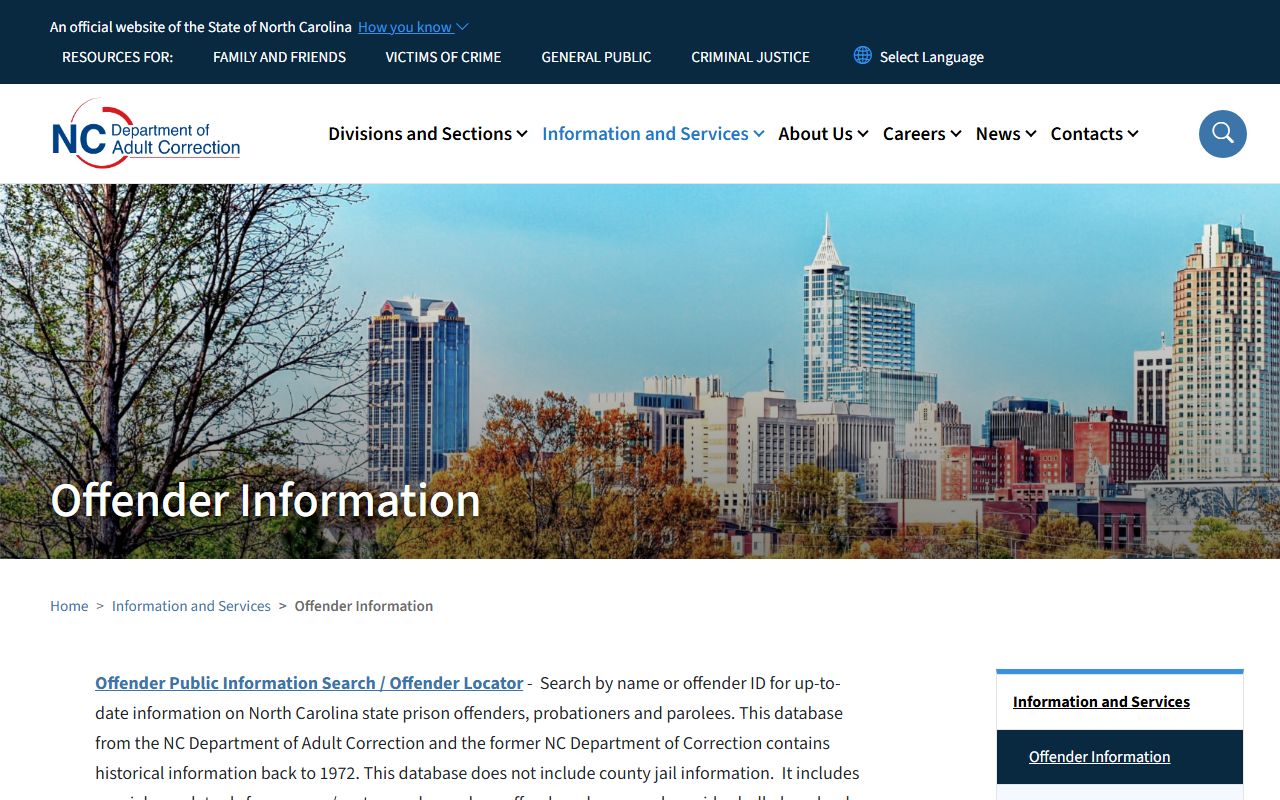
That database is the right tool when a Durham case ends in a state prison sentence rather than a short jail stay.
The state also keeps a public sex offender registry through the State Bureau of Investigation. It lists registered offenders by name or by area, with profile data and email alerts. Only registered offenders appear, so it is not a general criminal record search.
The registry's landing page is shown below and explains how to search by name or location.
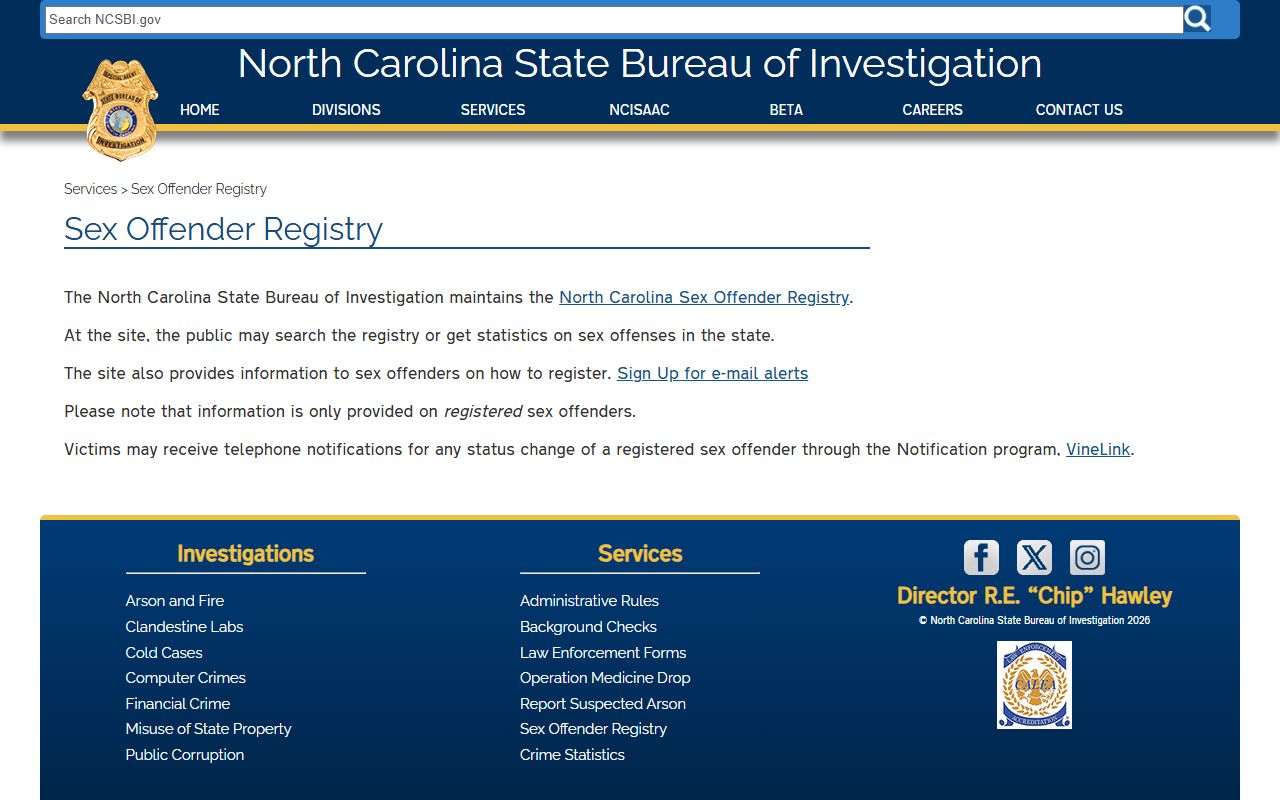
For custody alerts on a specific person, North Carolina uses a free notification service that ties into the jail and prison systems.
You can register for those alerts through VINELink, the custody notification system shown below.
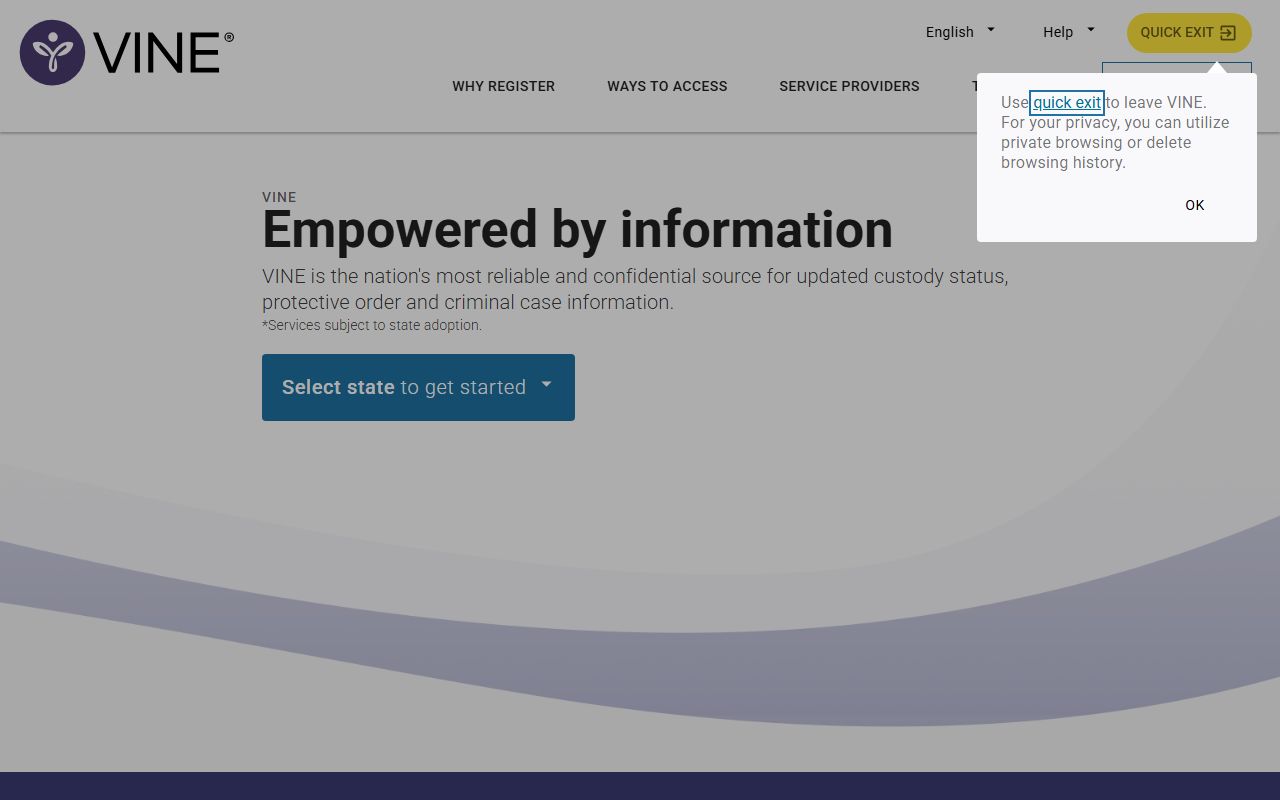
VINELink sends free, confidential alerts by phone, email, text, or TTY when a person's custody status changes. The released inmates page covers these state and notification tools in more depth.
Prosecutors and Public Defenders
After an arrest, the District Attorney decides whether to prosecute. The Durham County District Attorney, Satana Deberry, leads Prosecutorial District 16 from the eighth floor of the courthouse. The DA represents the State in criminal cases, prepares the criminal trial dockets, and works with law enforcement. The office does not give legal advice to defendants about their charges, and it cannot tell you about license or insurance points.
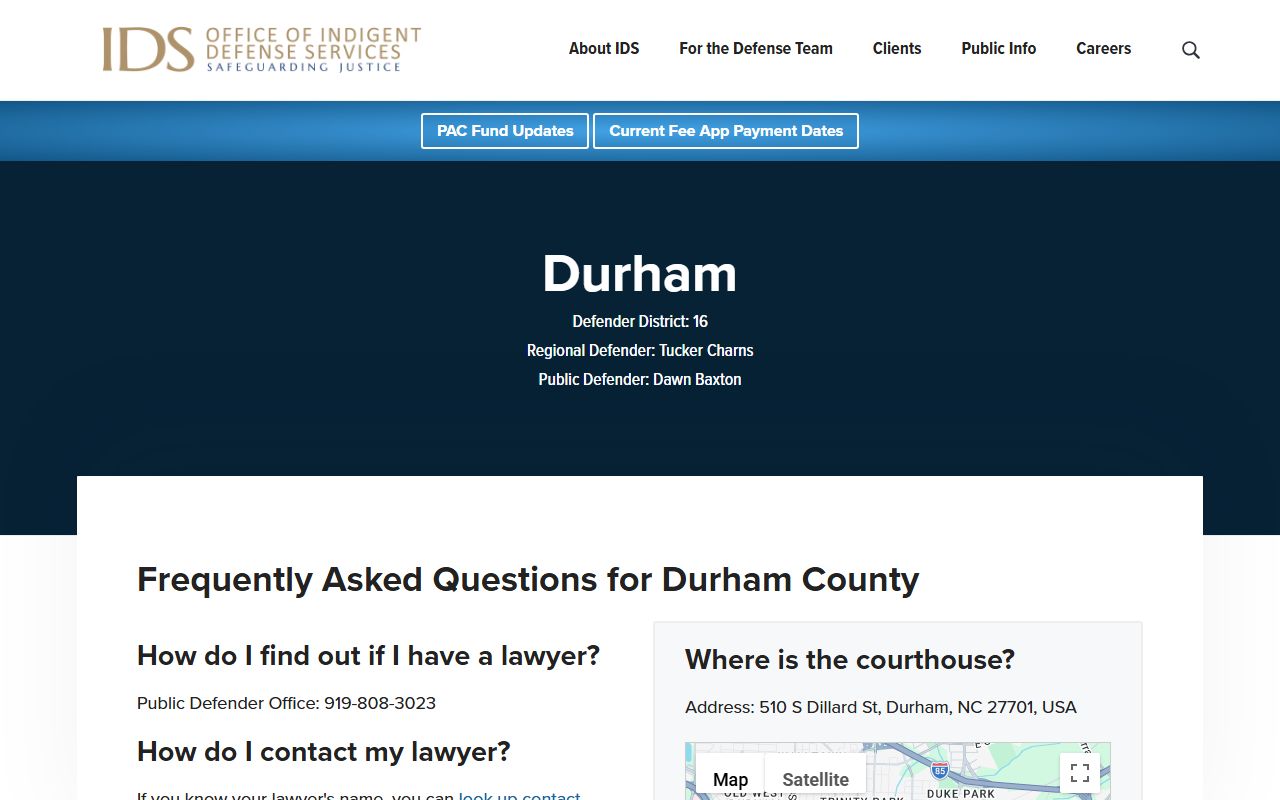
People who cannot afford a lawyer may qualify for a public defender. Durham is Defender District 16, and indigent defense is handled through North Carolina Indigent Defense Services. Court-appointed counsel and the Public Defender represent eligible defendants, though a convicted person may face a reimbursement obligation. Eligibility is set through the court and IDS process.
The indigent defense page for Durham is shown below and lists the local defender office details.
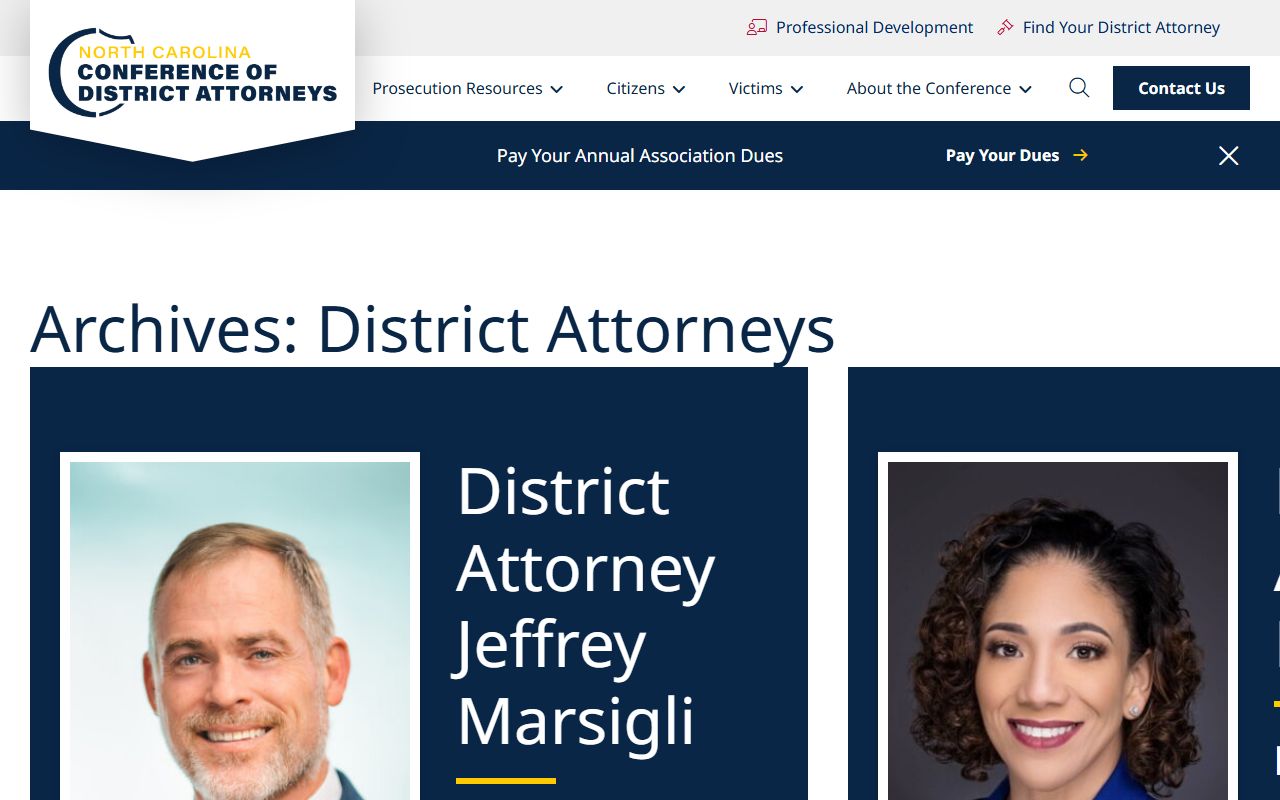
The state directory of district attorneys is another useful reference for the prosecutor's office that handles Durham arrests.
That directory is shown below and lists the Durham District 16 office.
Knowing who prosecutes and who defends helps you read the attorney fields on a Durham County criminal record.
Warrants Behind an Arrest
Many arrests start with a warrant. An arrest warrant, a bench warrant, or an order for arrest can lead to a booking. The Durham County Sheriff's Office runs warrant control from inside the county jail at 219 South Mangum Street. The Sheriff's FAQ says staff will not give active warrant information over the phone, and the county does not post a broad public warrant search.
Court-related warrant events can still appear in the eCourts Portal as case events. The portal may log when an order for arrest or a criminal summons is issued, returned served or unserved, reset, or recalled. Sealed warrants stay closed until they are unsealed or returned. The Durham County warrant records page explains how to check for these public warrant events and what to do about an outstanding warrant.
DWI and Traffic Arrests
Not every arrest is a felony. A driving while impaired charge, known in North Carolina as DWI, often starts with an arrest and a booking, then moves into the criminal court system. DWI cases carry their own court process and penalties, separate from a plain traffic ticket. A waivable traffic citation can be paid before court, but a DWI charge cannot be handled that way.
Because DWI sits at the line between traffic and criminal records, it shows up in both discussions. The Durham County traffic court records page covers DWI handling, license effects, and how a traffic case differs from a state driver record.
Note: A traffic conviction is reported from court to the DMV, but the state driver record is a separate file from the criminal court record.
Background Checks and Durham Criminal Records
People often want a Durham criminal record for a background check. The official route is the Clerk of Superior Court. The Cashier division handles certified background checks at the courthouse, and that certified result is the one courts and many agencies accept. The free court portal is good for a quick look, but it is not certified and it is not the official record.
A few cautions help here. The portal can lag behind the courthouse, so a recent arrest or disposition may not show right away. A blank search does not prove a person has no record. It can mean a misspelling, a wildcard problem, a sealed or expunged file, a case under a different name, or a case in another county. For anything that affects a job, housing, or a legal matter, confirm with the Clerk before you rely on a result.
One more point on fair use. Public arrest and court records are not the same as a regulated background screening. Using these records for credit, employment, or tenant decisions is governed by federal law, and a casual portal search is not a substitute for a proper, certified check.