
Durham County Superior Court Overview
North Carolina runs one statewide court system called the General Court of Justice. There are no separate county courts. Trial work splits between two divisions, and Superior Court is the higher of the two. It hears felony criminal cases, civil cases over $25,000, and certain complex or business matters when they are assigned to it. It also takes misdemeanors and infractions appealed up from District Court, where the case starts fresh.
Durham County sits in Superior Court District 16. The same district number covers District Court and the prosecutor's office, so the whole local court structure lines up under one number. All of these courts run out of the Durham County Courthouse downtown. The Clerk of Superior Court keeps the files for both trial divisions and also acts as judge of probate, which is a key North Carolina trait.
Because the system is unified, a Durham Superior Court case follows the same rules as a Superior Court case anywhere in the state. Local practice and local rules still matter, but the core jurisdiction and the record system are statewide.
What Durham County Superior Court Hears
Superior Court has a defined slice of the docket. On the criminal side it handles felonies, which are the most serious charges, from drug trafficking to assault, robbery, and homicide. On the civil side it hears money disputes that ask for more than $25,000. It also handles appeals for trial de novo, which means a misdemeanor or infraction decided in District Court can be retried in front of a Superior Court judge and, in many cases, a jury.
Some matters are routed to Superior Court because of their size or subject. Complex business disputes can be assigned to the state's Business Court track. Special civil proceedings, certain felony pleas, and post-conviction motions also land here. A felony case usually starts with a charge or a magistrate's process, then moves toward a grand jury indictment before it is tried in Superior Court.
Records from these cases sit in the Superior Criminal and Civil divisions of the Clerk's office. The state courts site lays out this jurisdiction in plain terms.
You can read the official breakdown on the North Carolina Superior Court page, which covers felony and civil thresholds statewide.
That same threshold, civil suits over $25,000 and all felonies, decides which division of the Durham courthouse keeps the file.
Durham County Superior Court Offices
Superior Court is not a string of separately numbered county courts. It is one division of the state system, staffed by Superior Court judges who rotate through the district. The offices below all work out of the same downtown courthouse, and each phone number routes to a specific function rather than a numbered courtroom. The District Attorney and Public Defender are not courts, but they appear in nearly every Superior Court criminal case, so they belong in the directory.
| Court / Office | Address | Phone | Notes |
|---|---|---|---|
| Durham County Courthouse | 510 S. Dillard St., Durham, NC 27701 | (919) 808-3000 | Main state courthouse for all divisions. |
| Clerk of Superior Court | 510 S. Dillard St., Durham, NC 27701 | (919) 808-3000 | Unified clerk for District and Superior Court; judge of probate. |
| Superior Court Judges | 510 S. Dillard St. | (919) 808-3240 | Felonies and civil cases over $25,000. |
| District Court Judges | 510 S. Dillard St. | (919) 808-3200 | Misdemeanors, infractions, family, juvenile, civil up to $25,000. |
| Civil Magistrates | 510 S. Dillard St., 3rd Floor M1-M3 | (919) 808-3013 | Small claims, landlord-tenant, marriages. |
| Criminal Magistrates | 219 S. Mangum St. (detention-related intake) | (919) 808-3019 | Warrants, involuntary commitments, initial process. |
| District Attorney | 510 S. Dillard St., 8th Floor | (919) 808-3010 | Prosecutorial District 16. |
| Public Defender | 510 S. Dillard St. | (919) 808-3023 | Defender District 16. |
| Family Court | 510 S. Dillard St., 6th Floor Room 6500 | (919) 808-3075 | Custody, divorce filing, non-DSS child support. |
For case dates and dockets tied to these offices, the Durham County court dockets page tracks the calendars in more detail.
Superior Court, District Court, and Magistrates
The clearest way to read the Durham court structure is to compare the three trial levels side by side. Superior Court takes the big cases. District Court takes the everyday volume of misdemeanors, traffic, and family law. Magistrates are officers of District Court who handle the smallest civil claims and the earliest criminal steps. The dollar limits and case types decide where a matter starts and where its record lives.
| Superior Court | District Court | Magistrate | |
|---|---|---|---|
| Main case types | Felonies, large civil, appeals for trial de novo | Misdemeanors, infractions, family, juvenile | Small claims, landlord-tenant, early criminal process |
| Civil dollar limit | Over $25,000 | $25,000 or less | Small claims (local cap; confirm with Clerk) |
| Examples | Felony trial, business dispute, retried DWI | Misdemeanor DWI, divorce, custody, traffic | Eviction, small money claim, marriage, warrant |
Magistrates are part of the lower court, not a separate branch. A small claims loss can be appealed to District Court for a fresh hearing, and a District Court misdemeanor can be appealed to Superior Court. So a single dispute can climb all three levels.
The state's plain-language District Court page is a useful companion read for the lower division.
You can review District Court jurisdiction and structure on the North Carolina District Court page, shown below.
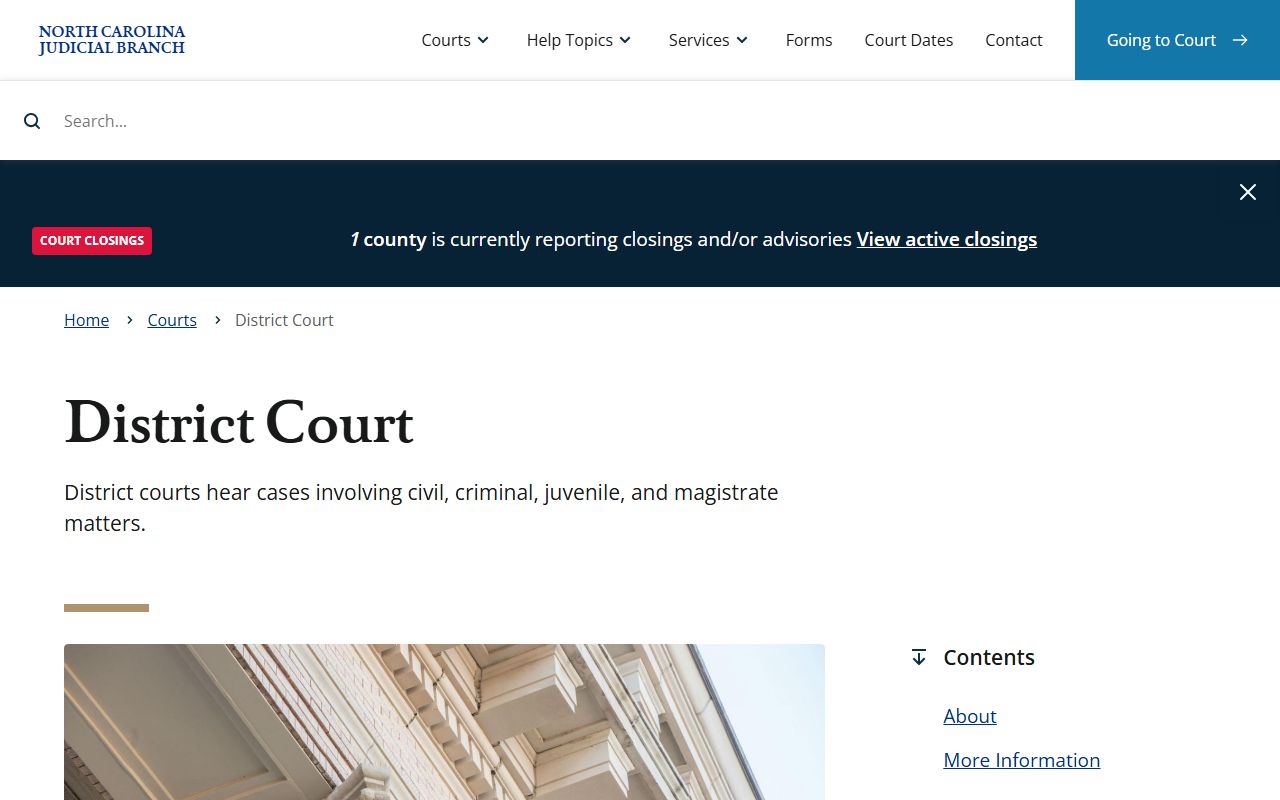
That overview makes the split plain: District Court handles the lower-dollar and lower-level work that does not rise to a Durham County Superior Court felony or large civil suit.
How a Case Moves Through Durham County Courts
A case rarely jumps straight to the top. It enters at the level set by the charge or the claim, then moves up only when the law allows. Magistrates and small claims feed into District Court. District Court feeds into Superior Court. Superior Court feeds into the appellate courts. The flow is the same for the whole state, which is why a Durham case map looks like any other North Carolina county's.
Case flow: District Court › Superior Court › North Carolina Court of Appeals › Supreme Court of North Carolina
- Small claims and early criminal matters begin with a magistrate, an officer of District Court.
- District Court hears misdemeanors, infractions, traffic, and most family law.
- Superior Court hears felonies, large civil suits, and District Court appeals tried de novo.
- The North Carolina Court of Appeals reviews most appeals from the trial divisions.
- The Supreme Court of North Carolina decides final appeals on major legal questions.
Criminal and civil tracks differ in the middle. A felony moves from charge to first appearance, then indictment, arraignment, pretrial, trial, and sentencing. A civil suit moves from complaint to answer, discovery, mediation, trial, and judgment. Both can be appealed once the trial court is done.
Criminal, Civil, and Family Divisions
The Clerk's office splits Superior Court work into clerk divisions, and the room you need depends on the case. Superior Criminal handles felony files, often labeled with CRS-style case numbers, plus bond forfeitures and superior criminal court dates. The Civil division covers the larger lawsuits and recent civil judgments. Family Court handles custody, divorce filing, and non-DSS child support, though many family cases sit in District Court.
Each division keeps its own counter and its own records. A felony record is not stored with a traffic citation, and a divorce file is not stored with a small claims appeal. The District Attorney, on the eighth floor, builds the State's criminal trial dockets. The Public Defender represents eligible defendants who cannot afford private counsel. Both work the Superior Court criminal calendar.
Knowing the division saves a trip. A felony record check starts with Superior Criminal. A large civil case starts with Civil.
District Attorney and Public Defender
Every Durham County Superior Court criminal case has two sides. The District Attorney for Prosecutorial District 16 is Satana Deberry, whose office sits on the eighth floor of the courthouse. The DA represents the State of North Carolina, prepares the criminal trial dockets, protects victims, and advises law enforcement. The office prosecutes felony and misdemeanor cases filed in both Superior and District Court.
Durham County District Attorney
510 South Dillard Street, 8th Floor
Durham, NC 27701
(919) 808-3010
Prosecutorial District 16
Durham County Public Defender
510 South Dillard Street
Durham, NC 27701
(919) 808-3023
Defender District 16
The Public Defender, for Defender District 16, represents eligible indigent defendants and others the law entitles to counsel. Eligibility runs through court and Indigent Defense Services procedures, and a convicted defendant may owe reimbursement. Victims should report crimes to law enforcement first, and emergencies go to 911. The DA's office cannot give defendants legal advice about charges or license points.
Note: The District Attorney and Public Defender are parties and counsel in court, not record custodians, so case files still come from the Clerk of Superior Court.
Durham County Superior Court District 16
North Carolina draws its trial courts into numbered districts. Durham County is Superior Court District 16 and also District Court District 16, so the trial-court lines match. The prosecutor covers the same ground as Prosecutorial District 16. Superior Court judges are elected and rotate through the district, which keeps one judge from sitting on every local case year after year.
The single-district setup keeps Durham court business in one building rather than scattered satellite courts. The contact directory for the county lists each office, judge, and division in one place. It is the fastest way to confirm a phone number before a visit.
You can find every office in the building through the Durham County contact directory, which lists the Clerk, judges, DA, magistrates, and trial court administration.
Specialty Courts in Durham County
Durham County runs problem-solving courts that aim to cut repeat offenses for nonviolent people whose cases tie to substance use or mental illness. Durham Recovery Court, also called Drug Treatment Court, offers a court- and probation-supervised path in place of incarceration for people with substance use disorder. It pairs review hearings with treatment, drug testing, incentives for progress, and sanctions for slips.
Durham County Mental Health Court Diversion connects people with serious mental illness to treatment and services to break the jail-and-release cycle. The North Carolina Judicial Branch lists Durham, District 16, among its mental health court sites. These programs sit alongside the regular Superior and District Court dockets rather than replacing them, and entry depends on screening and a prosecutor's review.
The released inmates page covers the reentry resources that support people leaving custody after a Durham County case.
Finding Durham County Superior Court Records
Superior Court records run through the same statewide system as the rest of the Durham docket. The North Carolina eCourts Portal lets the public look up case summaries, parties, hearings, and dispositions for both trial divisions at no charge. The Portal is public access, not the official record, so an official certified copy still comes from the Clerk of Superior Court at the courthouse.
Topic guides from the state courts help readers sort out what is public and what is sealed. Court records, traffic, expunctions, and juvenile confidentiality each have their own rules, and several of those rules affect what a Superior Court search returns.
The state's traffic guidance explains waivers, payment, appeals, and how a result reaches the DMV.
You can read the official North Carolina traffic violations help topic, shown below, before paying or contesting a citation.
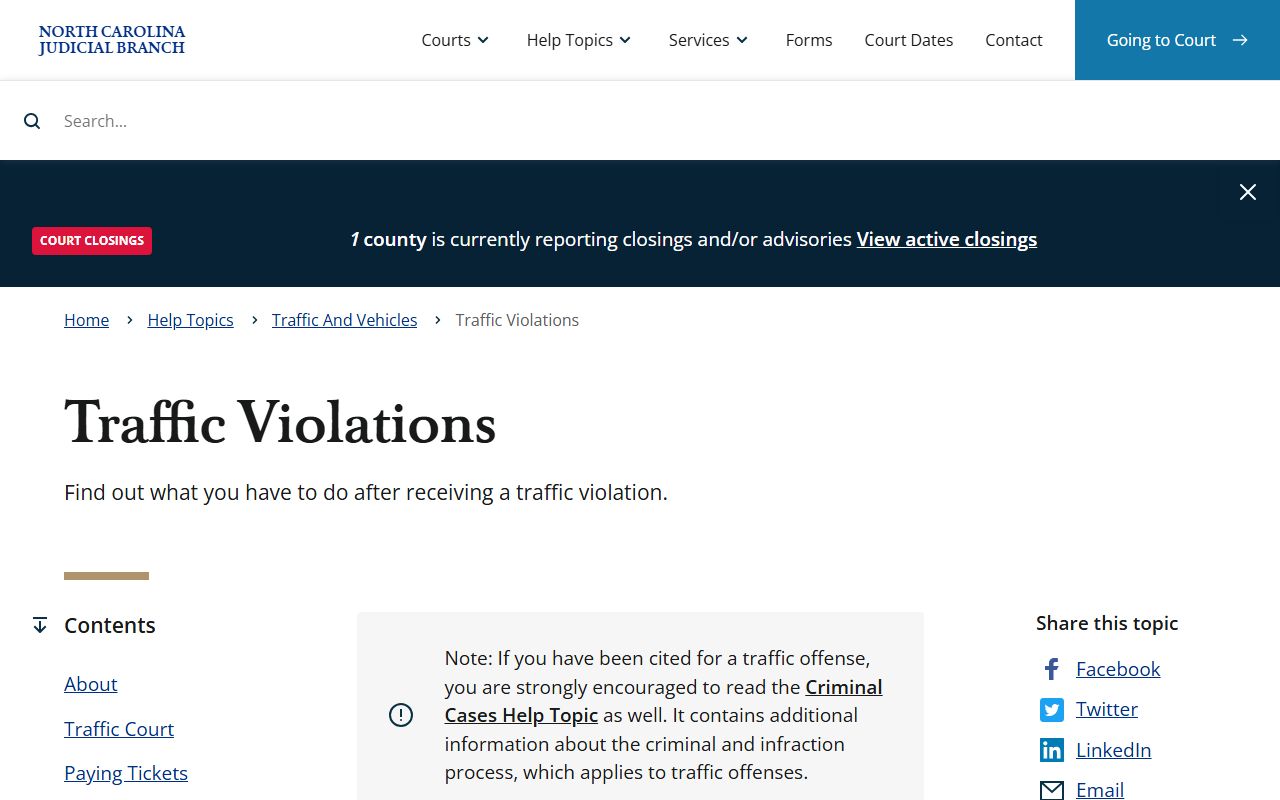
A waived traffic ticket is treated as a responsible plea, which is one reason a minor case can still show up later in a Durham County court records search.
Expunction can change what appears too. A granted expunction removes a record from public view.
The state's expunction help topic, captured below, sets out eligibility, the process, and the filing fee.
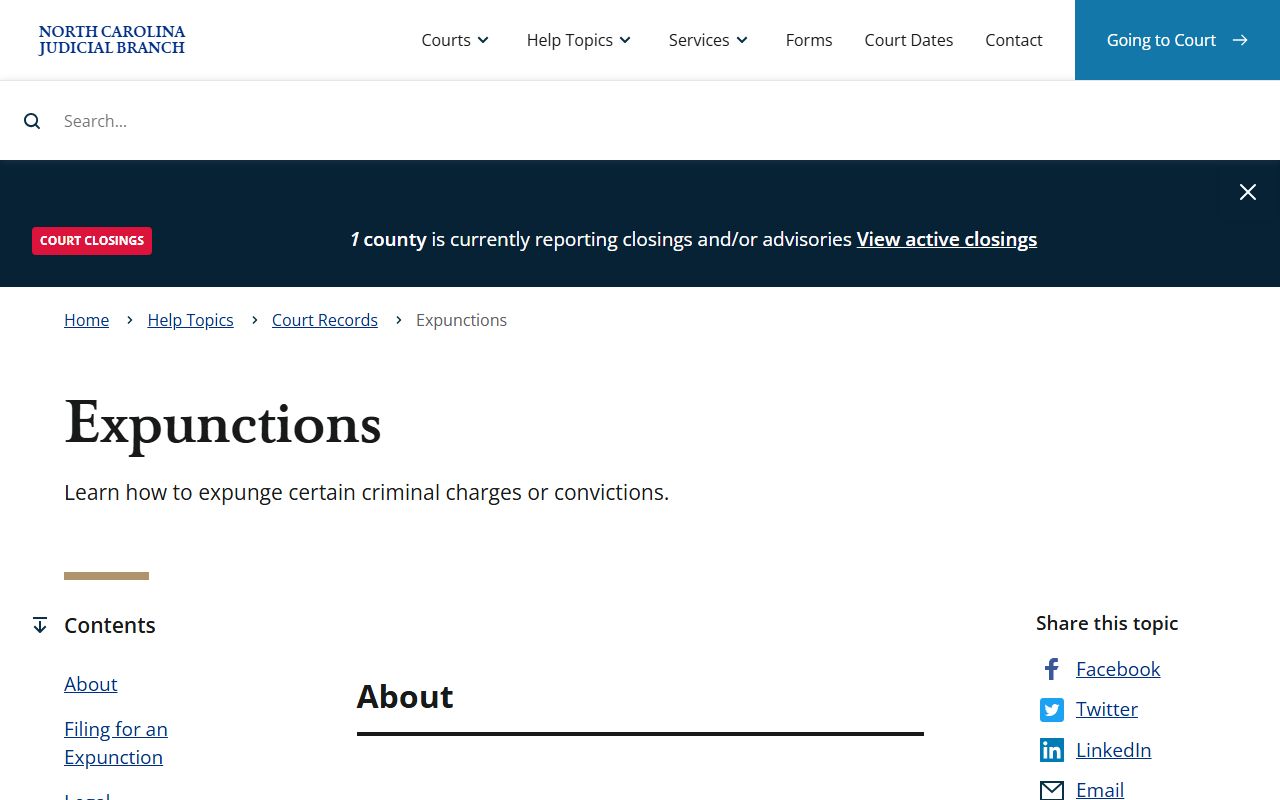
If a dismissed charge or old conviction was expunged, it may no longer appear in the portal at all, even though the Superior Court once heard it.
For the full search walkthrough, the Durham County court records page and the arrest records page go deeper than this page can.
Restricted Superior Court Records
Not every Superior Court record is open. Juvenile records are confidential under state law and limited to people the statute names, such as the juvenile, a parent, an attorney, or a prosecutor. Adoption records are sealed except for the decree and index entry. Involuntary commitment records are confidential. Expunged records are pulled from public view entirely.
To see a sealed file, you usually need a statute that allows it or a court order, and the court is the custodian of that decision. Start with the Clerk's division that holds the record. Do not rely on third-party sites to tell you whether something is sealed, since their data can be stale.
The state's juvenile guidance is the clearest source on what stays confidential.
You can review the North Carolina juvenile delinquency help topic, shown below, for the confidentiality rules.
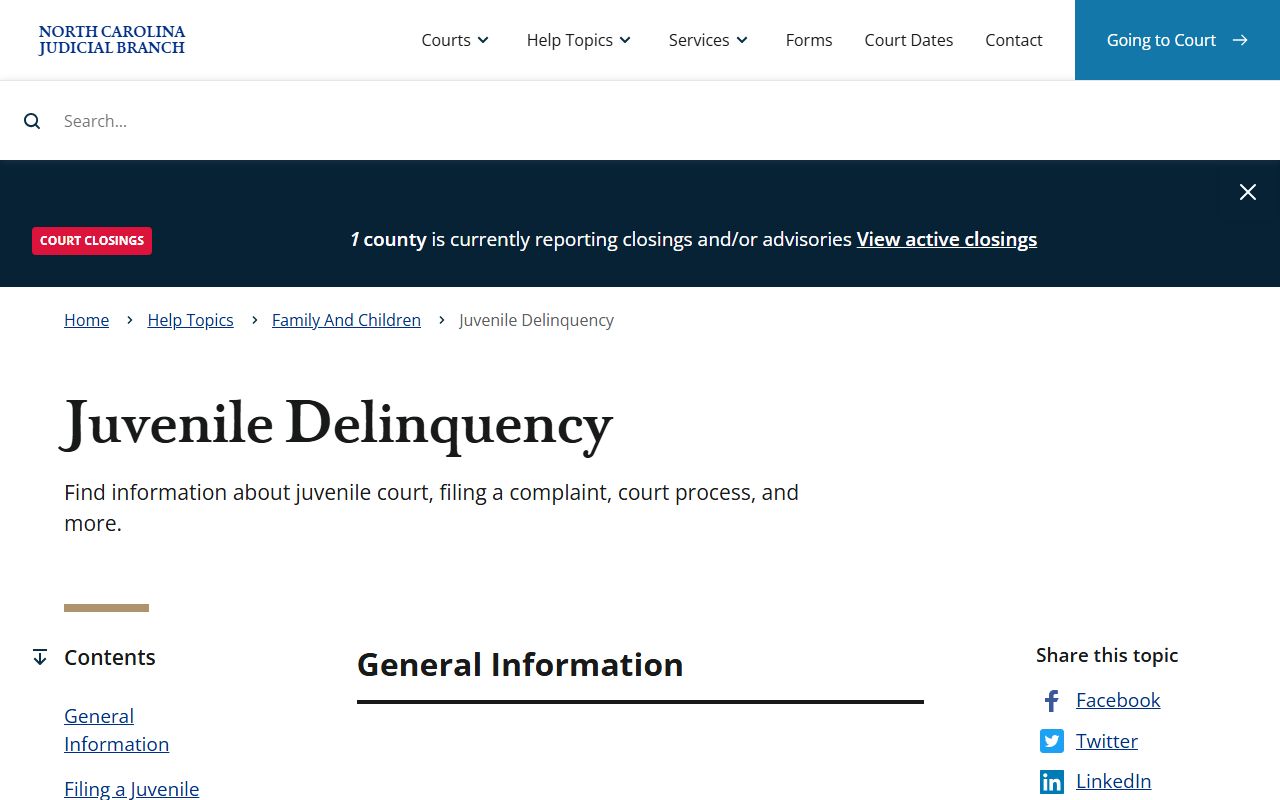
Those juvenile limits apply across the unified system, so a Durham juvenile matter is closed to the public whether it touches District or Superior Court.